Charity Care Rules: How IRS Section 501(r) Lowers Hospital Bills
Learn how charity care under IRS Section 501(r) requires nonprofit hospital organizations to lower or forgive medical bills based on household income.
Written by FairVisitHealth Editorial Team · Healthcare Pricing Analysts
Reviewed by the FairVisitHealth Editorial Team (Pricing & Billing Data Review). Not medical advice. Data sourced from CMS, HRSA, and hospital price transparency filings.

Key Takeaways
- Nonprofit hospital organizations received an estimated $28.1 billion in total tax exemptions in 2020 according to KFF.
- Tax-exempt hospital organizations must accept and process financial assistance applications for at least 240 days after sending the first billing statement according to federal law.
- Federal rules restrict hospitals from initiating extraordinary collection actions for at least 120 days from the initial bill.
- Every dollar invested in nonprofit hospital organizations through federal tax exemptions yields nearly $9 in community benefits according to the American Hospital Association.
- U.S. hospitals provided $41.6 billion in total uncompensated care in 2019 according to the American Hospital Association.
What Is Hospital Charity Care?
Hospital charity care provides free or discounted medical services to eligible patients based on household income guidelines established by healthcare facilities. Federal tax rules mandate tax-exempt hospital organizations to establish formal financial assistance policies for each facility operated. Approved applicants receive partial or complete account balance forgiveness directly from hospital billing departments. You search hospital policies directly through the FairVisitHealth financial assistance directory.
 Source: Internal Revenue Service (2026)
Insured and uninsured patients both qualify for charity care when out-of-pocket charges exceed household financial capacity. Uninsured individuals receive direct bill reductions based on annual household earnings. Insured patients receive financial assistance for unpaid deductible balances remaining after insurance payments process. Hospital billing offices evaluate patient eligibility against published policy guidelines.
In 2019, U.S. hospitals provided $41.6 billion in uncompensated care according to the American Hospital Association. Uncompensated care totals combine charitable fee reductions with uncollected bad debt. Federal accounting standards require nonprofit hospital organizations to separate charitable reductions from bad debt accounts. Hospital financial assistance policies state specific application requirements for patient review.
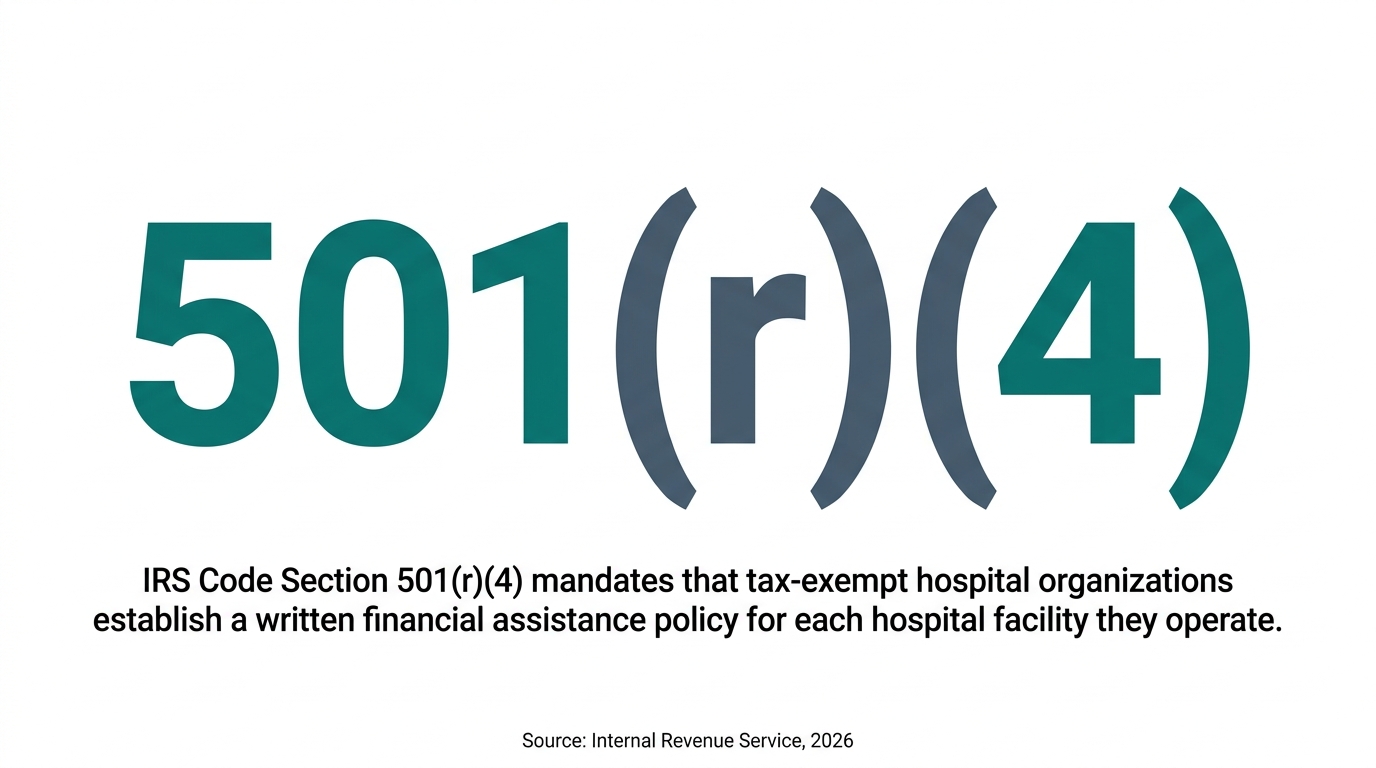
IRS Code Section 501(r)(4) mandates tax-exempt hospital organizations to establish a written financial assistance policy for each hospital facility operated according to the Internal Revenue Service. Written assistance policies outline eligibility rules, discount structures, and application submission processes. Hospital billing offices distribute summary assistance notices in emergency rooms and admissions departments. Patients request paper application forms directly from hospital financial counseling offices.
How IRS Section 501(r) Regulates Hospital Financial Assistance
IRS Section 501(r) regulates hospital financial assistance by requiring tax-exempt hospital organizations to publish written assistance policies, limit billing charges, and delay aggressive debt collection. Tax-exempt classification grants substantial financial advantages to nonprofit healthcare networks. The estimated total value of federal, state, and local tax exemptions for nonprofit hospital organizations reached approximately $28.1 billion in 2020 according to KFF. Federal tax oversight requires measurable public health investments in exchange for tax exemption benefits.
 Source: Internal Revenue Service (2026)
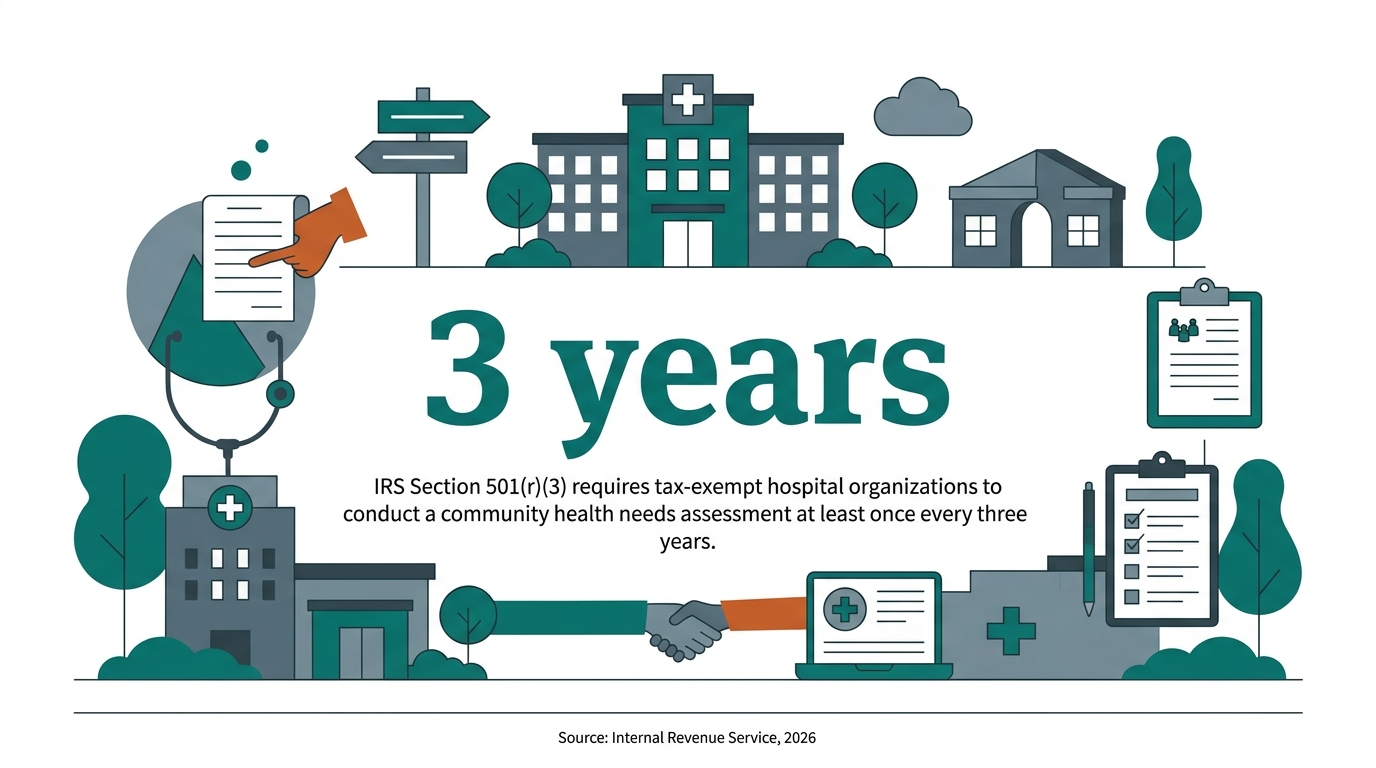
Every dollar invested in nonprofit hospital organizations through federal tax exemptions yields nearly $9 in community benefits according to the American Hospital Association. Community benefit activities include free patient care, health education programs, and medical research projects. IRS Section 501(r)(3) requires tax-exempt hospital organizations to conduct a community health needs assessment at least once every 3 years according to the Internal Revenue Service. Hospital boards review health assessment findings to guide local health assistance spending.
IRS Schedule H Form 990 requires hospital organizations to report financial assistance and community benefit activities annually according to the Internal Revenue Service. Schedule H disclosures list annual charity care expenditures across each hospital facility. Public tax filings allow independent researchers to evaluate charity care spending levels. Federal regulators examine Schedule H reports during compliance reviews.
Federal rules mandate prominent display of financial assistance policies across hospital websites. Patients inspect published assistance policies prior to scheduling non-emergency care. Written financial assistance policies set clear expectations for hospital billing practices. Compliance reviews help ensure nonprofit healthcare facilities follow established policy terms.
Who Qualifies for Hospital Charity Care?
Patients qualify for hospital charity care by meeting income and household size criteria defined in each facility's financial assistance policy. Federal regulations allow individual hospital organizations to establish specific income cutoffs and discount tiers. Income thresholds align with Federal Poverty Level guidelines issued annually by federal authorities. Some state laws set minimum financial assistance standards underneath federal requirements.
Financial assistance policies specify sliding scale discounts based on annual household earnings. Families earning below two hundred percent of Federal Poverty Level guidelines frequently receive full balance forgiveness. Households earning higher incomes often receive partial reductions on medically necessary hospital care. Applicants provide wage stubs, tax records, or bank statements to verify income eligibility.
Insured individuals holding high deductible health plans qualify for hospital charity care discounts. High deductible health plans leave families responsible for significant out-of-pocket medical costs. Hospital billing departments evaluate remaining deductible balances against financial assistance guidelines. Patients review self-pay options and medical rates using FairVisitHealth bill negotiation guides.
Financial assistance applies to emergency treatment and medically necessary hospital services. Elective cosmetic procedures remain excluded from charity care eligibility in most hospital policies. Patients facing catastrophic medical costs request special hardship reviews from hospital billing directors. Hardship clauses provide financial relief when medical charges exceed total household earnings.
How Amounts Generally Billed Cap Patient Charges
Amounts Generally Billed cap patient charges by limiting what financial assistance eligible patients pay to the average rates accepted from insured patients. IRS Section 501(r)(5) limits amounts charged to financial assistance policy-eligible individuals to not more than the amount generally billed to insured patients according to the Internal Revenue Service. Hospital chargemaster list prices often exceed commercial insurance payment rates. Section 501(r)(5) protects qualifying patients from paying full gross charges.
Hospital accounting offices calculate Amounts Generally Billed using historical payment data from commercial insurers and Medicare. The calculated percentage represents average reimbursement rates accepted by the hospital facility. Financial assistance eligible patients receive bill adjustments reflecting calculated reimbursement percentages. You analyze medical charges using the FairVisitHealth hospital bill negotiation portal.
Federal pricing caps prohibit tax-exempt hospitals from charging uninsured patients higher rates than insured patients pay. Pricing protections create equitable billing practices for families experiencing financial hardship. Itemized bill statements reflect procedural codes and applied discount adjustments. Reviewing line item billing details helps patients spot potential billing errors.
Hospitals publish calculation methodologies within financial assistance policy documentation. Patients request calculation worksheets from patient accounting representatives. Verifying calculation formulas ensures correct bill adjustments apply to account balances. Written confirmation confirms final balance amounts following assistance adjustments.
How to Apply for Hospital Charity Care
You apply for hospital charity care by submitting a completed financial assistance application with household income documentation to the hospital billing office. Obtain official application forms from hospital admissions desks or facility web portals. Federal standards require paper applications in emergency departments and registration areas. Patient accounting staff assist applicants with form completion upon request.
Gather financial records supporting reported household income levels. Common documentation requirements include recent pay stubs, federal tax returns, and bank account statements. Unemployed applicants submit signed hardship letters describing current financial circumstances. Complete every required section on the application form to avoid processing delays.
Submit completed application packets to the hospital billing department using certified mail or secure online portals. Retain personal copies of all submitted application materials for record keeping. Follow up with patient account representatives to verify application receipt. Billing specialists process complete application files faster than partial submissions.
Application processing times vary across individual hospital systems. Hospital billing offices issue written determination letters upon review completion. Approved applicants receive updated billing statements showing adjusted balance amounts. Denied applicants retain rights to appeal decisions through hospital administrative channels.
What Rights Protect Patients During Debt Collection?
Federal tax rules protect patients during debt collection by banning extraordinary collection actions for at least 120 days after the first post-discharge bill and pausing collection activities during financial assistance reviews. Extraordinary collection actions include wage garnishments, credit bureau reports, property liens, and legal lawsuits. IRS Code Section 501(r)(6) prohibits tax-exempt hospitals from engaging in extraordinary collection actions before making reasonable efforts to determine financial assistance eligibility according to the Internal Revenue Service. Collection bans protect patients while eligibility determinations remain pending.
Hospitals must refrain from initiating extraordinary collection actions for at least 120 days after sending the first post-discharge bill according to the Federal Register. The 120-day window provides time for patients to obtain and submit financial assistance forms. Collection activity halts immediately when patients submit completed applications. Additional debt resolution steps appear in the FairVisitHealth debt reduction guide.
Nonprofit hospital organizations must accept and process financial assistance applications for at least 240 days from the date of the first post-discharge billing statement according to the Legal Information Institute. Submitting an application within 240 days obligates the hospital to process the evaluation. Account transfers to third-party collection agencies pause during active assistance reviews. Hospital billing departments recall collection accounts upon approving financial assistance applications.
Written dispute notices preserve patient rights during collection disagreements. Contacting hospital billing supervisors helps resolve premature collection actions. Knowing statutory timelines protects consumers from improper debt collection practices. Formal assistance approval documentation provides permanent proof of balance resolution.
Related Cost Guides
Frequently Asked Questions
What is hospital charity care?
Hospital charity care provides free or discounted medical services to eligible patients meeting household financial guidelines. Federal tax rules mandate tax-exempt nonprofit hospital organizations to establish written financial assistance policies to maintain public tax exemptions. Approved patients receive partial or complete balance forgiveness directly from hospital billing departments.
Do all nonprofit hospitals offer charity care under IRS Section 501(r)?
IRS Code Section 501(r)(4) mandates tax-exempt hospital organizations to establish a written financial assistance policy for each hospital facility operated. Formal policies set household income eligibility thresholds and outline application procedures for patients. Hospital organizations report financial assistance activities annually to the Internal Revenue Service on Schedule H Form 990.
Do insured patients qualify for hospital charity care?
Insured patients qualify for financial assistance when out-of-pocket medical charges exceed household financial capacity. Commercial insurance plans pay primary claims first, and hospitals evaluate remaining deductible balances against financial assistance guidelines. Insured status does not prevent patients from receiving partial or complete balance reductions.
Does a hospital stop collection activity while an application is pending?
IRS Section 501(r)(6) prohibits tax-exempt hospitals from engaging in extraordinary collection actions before making reasonable efforts to determine eligibility. Nonprofit hospital organizations must accept and process financial assistance applications for at least 240 days after sending the first billing statement. Hospitals pause collection activity while reviewing completed applications.
Get Free Healthcare Savings Tips
Weekly tips on saving money on medical bills, finding affordable care, and navigating the healthcare system.
By subscribing you agree to receive emails. Unsubscribe anytime.
Find Affordable Healthcare Near You
Search 9M+ providers with transparent cash-pay prices, then negotiate lower bills.